
Yes, they connect to any LoRaWAN or MQTT infrastructure (Kerlink, Cisco, Milesight, MultiTech, etc.) for flexible integration with existing SCADA systems.
< Industries/
energy-renewables
Smart Monitoring for Energy & Renewables — ATEX-Certified Sensors for Biogas and Hydrogen
Quick Overview
| Problem | Biogas and hydrogen facilities operate under extreme process conditions and strict safety regulations. Leaks or pressure instability can lead to costly downtime, loss of energy yield, or ATEX non-compliance. |
| Solution | Sensa.io provides ATEX-certified wireless sensors for pressure, differential pressure, valve position, temperature, vibration, and acoustic monitoring — ensuring safe, efficient, and compliant renewable energy operations. |
| Value | ↑ Process stability • ↓ Maintenance cost (−30 %) • ROI < 12 months |
| ATEX | Zones 0–2 • Ex ia IIC T4 Gb certified sensors for gas and renewable installations |
The Energy Transition Challenge
The rapid expansion of biogas and hydrogen production is reshaping the energy landscape — but it also introduces new risks and requirements.
Both processes involve flammable gases, variable pressures, and corrosive atmospheres, requiring equipment that is intrinsically safe, accurate, and low maintenance.
Typical issues faced by operators:
- Gas leaks or overpressure causing safety hazards.
- Blocked filters and membranes reducing gas purity and yield.
- Manual monitoring slowing down maintenance and compliance reporting.
Sensa.io helps operators overcome these challenges with ATEX-certified, battery-powered sensors that deliver real-time process visibility — from digesters to compressors and storage units.
Why ATEX & Continuous Monitoring Matter 🔥 ATEX
Biogas and hydrogen sites often fall under ATEX Zone 1 or Zone 2 classifications, with explosive gas mixtures or methane vapours present.
Conventional wired instruments require complex cabling, gas-tight junction boxes, and frequent calibration — all costly and intrusive.
Sensa.io simplifies this with wireless, intrinsically safe sensors, removing the need for cabling or power supply in hazardous areas.
The result: reduced installation cost, safer maintenance, and continuous process insight.
A single undetected biogas leak can waste over €30,000 in methane losses per year and trigger safety incidents.
Core Use Cases for
Energy & Renewables
Use Case
Sensor Type
ATEX
ROI/Value
Pipeline Valve Position Feedback (Remote Safety & Control) — ATEX
Valve position
Remote safety control
Digester Mixer Vibration Monitoring (Agitator Reliability & Process Stability) — ATEX
Vibration
Prevents motor failures, maintains homogeneity
Flare & Torch Acoustic Monitoring (Abnormal Venting & Emissions Control) — ATEX
Acoustic
Detects leaks and venting issues
Compressor Vibration & Temperature Monitoring (Hydrogen & Biogas) — ATEX
Vibration
Reduces failure risk
Biogas Upgrading Filter ΔP Monitoring (Membrane & PSA Protection) — ATEX
Differential Pressure (ΔP)
Predicts maintenance, protects quality
Hydrogen Injection Valve Position Monitoring (Distribution & Safety Control) — ATEX
Valve position
Safety & compliance
Biogas Digester Pressure & Temperature Monitoring (Process Stability & Safety) — ATEX
Pressure
Temperature
Increases yield, ensures safety
Biogas Digester Pressure & Temperature Monitoring (Process Stability & Safety) — ATEX
Hydrogen Injection Valve Position Monitoring (Distribution & Safety Control) — ATEX
Biogas Upgrading Filter ΔP Monitoring (Membrane & PSA Protection) — ATEX
Hydrogen Storage Overpressure Monitoring (Safety-Critical Tanks) — ATEX
Compressor Vibration & Temperature Monitoring (Hydrogen & Biogas) — ATEX
Flare & Torch Acoustic Monitoring (Abnormal Venting & Emissions Control) — ATEX
Digester Mixer Vibration Monitoring (Agitator Reliability & Process Stability) — ATEX
Pipeline Valve Position Feedback (Remote Safety & Control) — ATEX
Vibration
Acoustic
Differential Pressure (ΔP)
Temperature
Pressure
Valve position
How Sensa.io Technology Works
| Open Wireless Architecture | All sensors are gateway-agnostic and compatible with LoRaWAN, MQTT, or Modbus infrastructure. They integrate directly with any SCADA or energy management system — Schneider EcoStruxure, ABB, Honeywell, or Siemens Energy. |
| Sensor Engineering |
|
| Data Analytics |
All measurements are encrypted (AES-128) and transmitted securely to your cloud or on-premise systems. |
Proven ROI and Field Results
Operators who deployed Sensa.io in upstream fields typically achieved:
−30 %
Maintenance cost reduction
+20 %
Equipment uptime increase
+8 %
Gas yield improvement
Case Example
Acoustic & Vibration Detection of Rockfall or Structural Movement (Early Warning & Worker Protection)
Early warning to protect workers underground

Case Example
Gas Vent Line Acoustic & Pressure Anomaly Detection (Methane Hazard Early Warning)
Early detection of dangerous methane releases
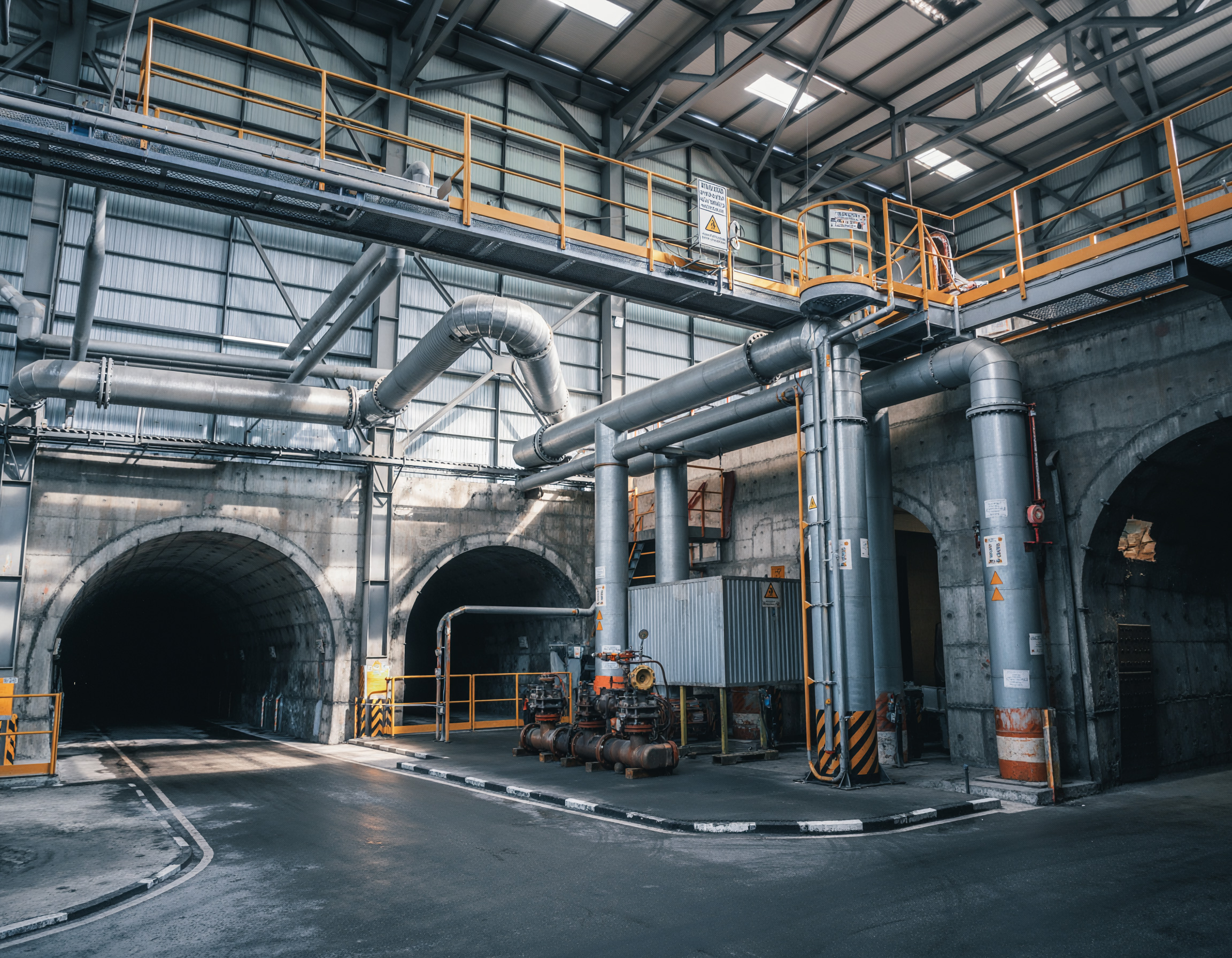
ATEX Compliance and Safety
All Sensa.io sensors for upstream operations comply with:

- Ex II 2 G Ex ia IIC T4 Gb (Gas Zones 0–1)
- Ex ia IIIC T135 °C Db (Dust Zones 20–21)
- IECEx certification and ATEX Directive 2014/34/EU
Delivered with Declaration of Conformity and calibration certificates, these sensors enable full digitalisation of biogas and hydrogen facilities while meeting the strictest safety standards.
FAQ - Common Questions
Are Sensa.io sensors compatible with any gateway or network?
What ATEX certifications apply to Sensa.io devices?
All hazardous-area models are certified Ex II 2 G Ex ia IIC T4 Gb and IECEx approved for Zones 0–2.
What is the typical battery life?
Up to 10 years at 15-minute intervals, depending on signal strength and environment.
How are the sensors integrated into existing systems?
Through standard protocols — LoRaWAN, Modbus, MQTT, REST API — no proprietary middleware needed.
How does predictive maintenance reduce OPEX?
Early anomaly detection reduces emergency interventions by 30–40 %, extends equipment life and lowers energy costs.
General & Functionality
What is the typical ROI when deploying sensors in upstream production?
Depending on asset criticality and scope, operators generally achieve payback within 6 to 12 months, driven by reduced downtime, lower maintenance overhead, and improved safety compliance.
How are calibration and maintenance handled in ATEX zones?
Sensors are factory-calibrated and include internal digital calibration tables. No field recalibration is required for 5–10 years; visual inspection every 3 years is sufficient.
How are data transmissions secured in remote fields?
All data packets are encrypted end-to-end with AES-128, and communication can run over private LoRaWAN or VPN-secured 4G networks. This guarantees industrial-grade cybersecurity and compliance with IT/OT segmentation policies.
Can Sensa.io sensors monitor hydrate or wax formation in flowlines?
Yes. Temperature sensors placed along the flowline detect critical cooling patterns leading to hydrate or wax build-up. Real-time data allows proactive heating or chemical injection, avoiding costly blockages.
How does acoustic leak detection work in upstream applications?
Acoustic sensors detect high-frequency sound anomalies generated by gas or fluid leaks. When combined with pressure readings, they localise the leak within ±10 m, reducing detection time from hours to minutes.
Can sensors remain active during well interventions or shutdowns?
Yes. Thanks to intrinsically safe (Ex ia) design, sensors can operate continuously in Zone 0 even during interventions, without hot-work permits or risk of ignition.
How do pressure sensors resist sand abrasion and high vibration in wellheads?
Each pressure module uses 316L stainless-steel diaphragms and vibration-proof electronics (rated up to 20 g RMS) with conformal coating. This ensures long-term stability in abrasive and high-shock environments typical of wellhead zones.
How does predictive maintenance with Sensa.io actually reduce OPEX?
By analysing vibration, pressure, or ΔP trends, the system detects anomalies before they escalate. This reduces emergency interventions by 30–40 %, extends equipment lifetime, and lowers energy consumption by 10–15 %.
How can Sensa.io sensors be integrated into our SCADA or DCS system?
Integration is immediate through standard industrial protocols: LoRaWAN, Modbus RTU/TCP, MQTT, or REST API. Data can feed directly into Honeywell, Emerson, Schneider, or ABB SCADA platforms without middleware.
How long do the batteries last in upstream operations?
Up to 10 years depending on the transmission interval and signal quality. The adaptive power management system automatically adjusts the sending frequency according to the measured parameter’s variability.
What ATEX certifications cover Sensa.io sensors?
All hazardous-area models are certified Ex II 2 G Ex ia IIC T4 Gb (Gas Zones 0–2) and Ex ia IIIC T135°C Db (Dust Zones 20–21). They are also IECEx approved and comply with the European Directive 2014/34/EU.
Are Sensa.io sensors compatible with any LoRaWAN gateway or network?
Yes. Sensa.io sensors are fully gateway-agnostic and connect seamlessly to any LoRaWAN or MQTT-compatible infrastructure — including Kerlink, Cisco, Milesight, MultiTech, or private industrial networks. This ensures flexible integration with existing SCADA or IoT systems.
Specific Technical Questions/
Energy & Renewables
What is the average ROI for biogas or hydrogen facilities?
Between 6 and 12 months depending on plant size and sensor coverage, driven by reduced leaks, downtime, and maintenance hours.
How are maintenance intervals defined in ATEX areas?
No recalibration is required for 5–10 years. Visual inspection every 3 years meets ATEX maintenance standards.
Do sensors support ESG or energy reporting?
Absolutely. Real-time data on gas yield, pressure stability, and efficiency directly feed ISO 50001 and ESG dashboards.
Can sensors operate in anaerobic digesters with high humidity?
Yes, IP68-rated and conformally coated electronics prevent condensation and corrosion.
Are sensors compatible with hydrogen purity or upgrading systems?
Yes, ΔP and temperature sensors are used in purification membranes to optimise throughput and maintain purity above 99.9 %.
Can pressure sensors detect very small hydrogen leaks?
Yes, when combined with acoustic sensors, they can detect pressure drops of less than 0.01 bar and pinpoint leak locations within minutes.
How do sensors handle H₂ embrittlement and biogas corrosion?
Materials include 316L or duplex stainless steel with anti-hydrogen diffusion coating and PTFE seals to ensure long-term resistance.
Trusted by a Worldwide Network
With partners in over 20 countries, Sensa IO delivers rugged sensor solutions to the toughest environments — everywhere.


